
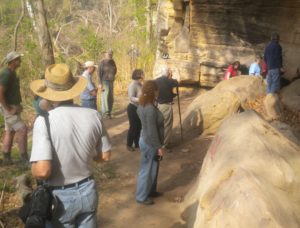
ESRARA BIENNIAL MEETING INFORMATION (2022) ESRARA is in the process of revitalizing and planning its next conference. An in-person ESRARA conference took place October 6, 7, 8, and (9) 2022. Mark your calendars! The biennial meeting typically consists of a short business meeting including the election of officers, a day (or morning, depending on the response) of paper and slide presentations where members discuss their current rock art research projects, and a day of tours to local rock … [Read more...] about Our last Conference in 2022
News
Ancient Native American Site Is Defaced in Georgia Forest
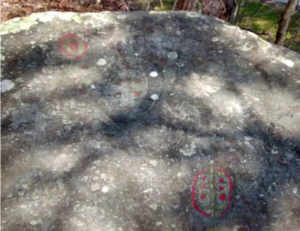
By Christine Hauser, The New York Times An ancient site of carved boulders and rock formations in a Georgia forest that has long been sacred to Native Americans has been vandalized with paint and deep scratches, the United StatesForest Service said. The boulders are part of the Track Rock Gap site in the Chattahoochee-Oconee National Forests, a protected area of more than 800,000 acres where more than 100 figure carvings known as petroglyphs were made on soapstone boulders by Native … [Read more...] about Ancient Native American Site Is Defaced in Georgia Forest
3D Photogrammetric Documentation of Eroded Rock Art Panel at the Millstone Bluff Site in Southern Illinois
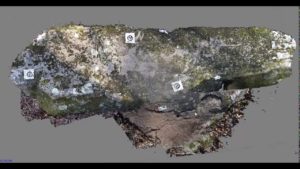
By Kayeleigh Sharp (SIUC) and Mark Wagner (SIUC) Millstone Bluff is a blufftop Mississippian-era (AD 1250-1500) site in southern Illinois that contains three rock art panels containing religious images that link together to form a cosmogram that expresses the Mississippian villagers' belief in a three-tiered universe (Upper World, This World, and Under World). The eastern panel contains only Upper World images (birds), the western panel contains only Under World images (snakes and … [Read more...] about 3D Photogrammetric Documentation of Eroded Rock Art Panel at the Millstone Bluff Site in Southern Illinois
Massive Rock Art Discovery in the Amazon

Photo: José Iriarte. Archaeologists recently discovered eight miles of painted rock face in the Colombian Amazon, sited along the Guayabero River. The Colombian and English researchers studying the works suspect that there could be upward of 100,000 individual paintings on 17 walls, dating from the time when humans first arrived in South America and then traveled through Central America. The thousands of paintings, made by people who lived there 12,500 years ago, have captivated … [Read more...] about Massive Rock Art Discovery in the Amazon
Oldest Known Paintings Created by Neanderthals, Not Modern Humans
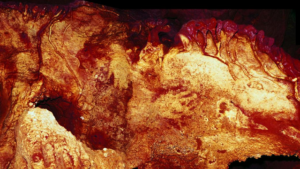
Hand stencils in Maltravieso Cave in Spain. Photo credit: H. Collado The oldest known cave paintings were created more than 64,000 years ago, and were not made by modern humans, according to a study published last week (February 23) in Science. Instead, the report concludes, the artists were probably Neanderthals. The findings add to mounting evidence that our ancient hominin cousins were capable of greater cultural and creative complexity than generally assumed. “Neanderthals appear … [Read more...] about Oldest Known Paintings Created by Neanderthals, Not Modern Humans
Ancient rock art at Carnarvon Gorge destroyed after walkway explodes in bushfire
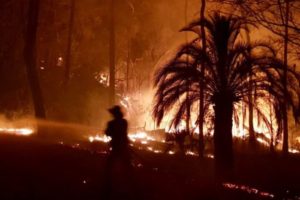
It has been revealed that ancient rock art was destroyed after a recycled-plastic walkway intended to protect the site exploded during a bushfire in Carnarvon National Park. The incident has prompted an archaeologist working with local Indigenous people to call for the removal of all flammable structures at vulnerable sites around the country. The destruction at Baloon Cave occurred during 2018's devastating Queensland bushfires, but has not been spoken about publicly until now to allow … [Read more...] about Ancient rock art at Carnarvon Gorge destroyed after walkway explodes in bushfire